Behavior Counseling
Common cat behavioral problems and treatment plans.
Cats can suffer from a multitude of ailments ranging from severe phobias to aggressions. The first step in controlling these issues is to understand the "what and why" of each situation. Proper diagnosis dispels myths in behavior.
It is common for a pet owner to assume that their pet is just being spiteful when in fact they may have a behavioral problem. At Scottsdale Cat Clinic, we strive to help our clients learn the real reasons for their pet's behavior and then find realistic options for a treatment plan.
Scottsdale Cat Clinic will first rule out any potential medical causes for your cat’s behavior by conducting a thorough physical exam, review your pet's history and develop a treatment plan.
This is because many feline ailments have symptoms that can easily be mistaken for behavioral issues. (Example: Sometimes kitties with a urinary tract infection will pee outside the box. This is medical, not behavioral.)
Common Cat Behavioral Problems
- Aggression towards other animals
- Separation anxiety from owners or other family pets
- Thunderstorm phobia
- Self-mutilation
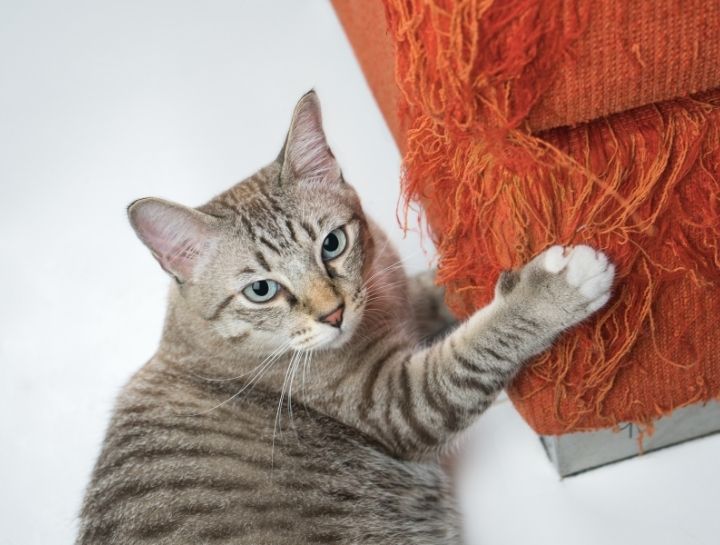
- Destruction
- Compulsive disorders (repeatedly performing a behavior to the extent that it interferes with everyday life) like tail chasing, shadow chasing, licking, fly snapping, spinning, pacing, chewing, and toy fixation
- Nuisance actions such as biting, scratching, and jumping
- Urine spraying/marking
Types of Treatment Plans
- Behavior modification
- Medication
- Environmental changes
- Medical recommendations
*We are not board certified Behavioralist.
What is a Veterinary Behaviorist?
Veterinary Behaviorists have achieved Board certification in the specialty of Veterinary Behavior. Board certified Veterinary Behaviorists are known as Diplomates. These veterinarians work with individual pet owners, other animal professionals, and facilities that care for animals in order to manage behavior problems and improve the wellbeing of animals. Behavioral problems can result from a neurochemical imbalance, a medical condition, learned fearful associations, or conflict over rules and social structure. A Board Certified Veterinary Behaviorist is in a unique position to diagnose medical conditions that can affect a pet’s behavior, as well as treat conditions that are purely behavioral.
Board certified Veterinary Behaviorists have both the medical and behavioral knowledge to evaluate cases to determine if there is a medical component. Additionally, Board certified Veterinary Behaviorists determine which medication(s), if any, would be most appropriate as part of an integrated treatment program that includes behavioral modification plans appropriate to the individual patient. Board certified Veterinary Behaviorists have the skills and knowledge to take detailed behavioral and medical histories, weed out irrelevant information, and base the treatment plan on the pertinent behavioral and medical information. This ability to take a good history and to ascertain relevant facts is essential and is often overlooked as a necessary skill when working with behavior problems. To Find a Board Certified Veterinary Behaviorist, click here. American College of Veterinary Behaviroists
Are Pet Behavioral Problems Common?
Actually, yes. But most problems are easily preventable if diagnosed and treated early. Do be prepared to try different approaches to the problem – not every pet is the same!
If it's a behavior problem, how can a veterinarian help me?
Some behavior problems, like agression issues, intercat aggression are best solved with a professional behaviorist. Less complex problems, like urinating outside the box, may need a combination of veterinary intervention and board certified behaviorallist.
A veterinarian is professionally trained in assessing behavior problems. We can help diagnose the specific problem and recommend appropriate action. Most importantly, if your pet has developed an unpleasant behavior, the first thing we need to do is rule out underlying health issues. Your cat is missing the litter box? This could mean a urinary tract infection. Sudden change in personality? Perhaps it's related to abnormal thyroid hormone levels.
In many cases, a behavior problem will be one we've seen before. And for many problems, there are tried and true remedies. For example, a different litter type or an extra pan in the house may help with cases of inappropriate elimination in cats.
Do some behavior problems require medication?
We will always try behavior modification first. However, there are some cases where medication, used in conjunction with behavior modification, can help to manage a problem. Of course, we'll discuss the pros and cons of any treatment with you so you can better choose what's best for your pet.
Behavior Consultations
If you feel you do not understand your pet's behavior and need help, we are here to assist you. Through a behavior consultation, we gather information regarding possible causes and contributing factors of the problematic behavior to make a diagnosis and an individualized behavior modification plan that fits your pet's needs.
Call us at (480) 970-1175 or request an appointment online to discuss your pet's behavior needs.